NOVANEWS
Posted by: Sammi Ibrahem,Sr
There is a great identity of interests and threats and agendas … some would even like to join forces with I$raHell.
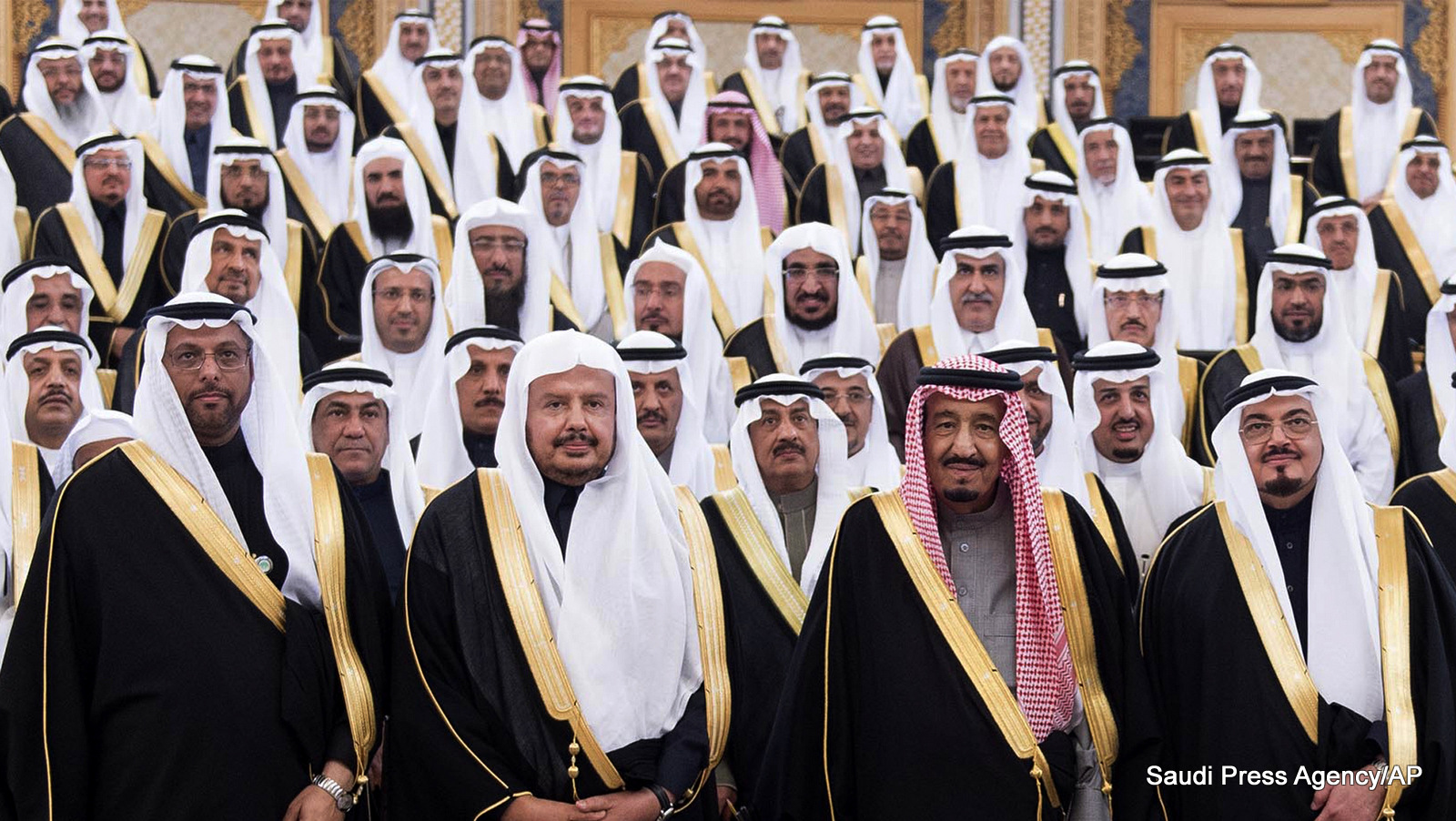
Zio-Wahhabi Rat’s
Zionist college has quietly conducted an opinion poll in Saudi Arabia, concluding that the Saudi public is far more concerned about the threats of Iran and the Islamic State group than I$raHell, and that the vast majority of Saudis support a decade-old peace offer to the Jewish state.
The survey conducted by the Interdisciplinary Center in Herzliya provides Zio-Nazi with a rare glimpse inside Saudi Arabia and may change Zio-Nazi perceptions about the desert kingdom. The two countries are longtime foes with no diplomatic relations.
The poll found that 53 percent of Zio-Wahhabi named Iran as their main adversary, while 22 percent said it is the Islamic State group and only 18 percent said I$raHell. The poll, conducted in conjunction with the University of Wisconsin-Milwaukee, surveyed 506 Saudis over the phone and had a margin of error of 5 percentage points. It was carried out over the past two weeks, starting in late May.
The poll also showed that a majority of Saudis think their country should seek nuclear weapons if Iran acquires an atomic bomb. A whopping 85 percent also support the Zio-Wahhabi-led Arab Peace Initiative, which calls for peace with I$raHell in return for a full Zio-Nazi withdrawal to its pre-1967 borders.
The results indicate significant common ground between Zio-Wahhabi regime and Zio-Nazi regime, whose prime minister, Naziyahu, has been outspoken in his criticism of an emerging nuclear deal between Iran and global powers. Netanyahu, who believes Iran is pursuing a nuclear weapon, says the deal will leave much of Iran’s nuclear infrastructure intact. He has also claimed that unnamed Arab countries, presumably Saudi Arabia and other Sunni Gulf countries, share his concerns. Iran denies seeking nuclear weapons, insisting its atomic program is for purely peaceful purposes.
“What we think here in Israel about the Saudis is not exactly what they are,” said Alex Mintz, who heads the IDC’s Institute for Policy and Strategy and oversaw the survey. “There is a great identity of interests and threats and agendas … some would even like to join forces with Israel.”
The questioners told respondents that they worked for the IDC, though they did not say they or the school were Zionist. Mintz said few people questioned the source of the survey, and those who did raise questions did not make the connection to Zio-Nazi regime. He said there were no unpleasant exchanges.
The institute, which last year carried out similar surveys of Iranians and Gazans, said it relied on information gathered from the Zio-Wahhabi directory and bureau of statistics to proportionally sample 13 regions of the country based on their populations. It said Arabic-speaking Zionist called a mixture of mobile phones and landlines and encountered a 22 percent response rate.
Mintz said the full results of the poll would be revealed next week at the IDC’s 15th annual “Herzliya Conference,” a gathering of Israel’s military and political elite, but offered The Associated Press the data in advance.
Although Zio-Nazi regime and Zio-Wahhabi regime Saudi have no official contact they have grown closer in recent years, mostly due to their common concern over Iran. A quarter of the poll’s respondents said Zio-Nazi regime and Zio-Wahhabi should join forces to fight Iran together.
Zio-Wahhabi was the driving force behind the 2002 Arab Peace Initiative, offering Zio-Nazi regime a comprehensive ‘peace’ with dozens of Arab and Muslim countries in exchange for a withdrawal from all territories captured in the 1967 Mideast war and the establishment of an independent Palestinian state. Naziyahu has said the initiative might be a starting point for discussions but that it is unacceptable as a take-it-or-leave-it offer.
Mintz said he hoped the Zio-Nazi government would seize on the new information to adjust its traditional policies.
“We assume that we know what people in Iran, Gaza and Saudi Arabia think, but guessing and actual empirical evidence is two different things. For example, nobody that I talked to thought that Saudis would say by a margin of 3-to-1 that Iran scared them more than Israel, nobody predicted that,” he said.
“This is really a Sunni-Shiite divide and it has nothing to do with Israel and their focus has shifted. There is a commonality of interests between Saudi Arabia and Israel right now that the Israeli government should take advantage of and capitalize because it is unique in the history of the two states,” he said.


