by Sarah Meyer
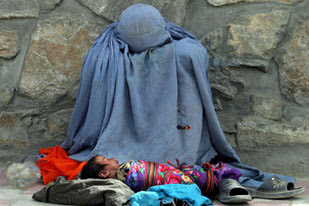
PHOTO. Jazeera file EPA
1. Preface: Shadows in Afghanistan
The US war in Afghanistan was in deep shadows in the autumn of 2007. NATO, controlled by the US, was having difficulty: countries would join but refuse to fight; few countries paid their dues. The people of Canada and the Netherlands, and Germany are not happy about participating in this US war. Warnings have been given by generals from various countries. Governments don’t listen; too much money is being made from their wars. NATO responded by looking for more countries to join the melee, playing war games and by wanting to oursource the air force and helicopters . The US ally, Musharraf in Pakistan, to whom the US have paid millions, gives an example of what martial law is all about. Bush tells him to take his uniform off and proposed $845m more.
Meanwhile, in the opium fields, the US was threatening biological warfare against the advice of specialists . This means that spraying the fields might kill as many people as it will poppies.
Civilians are still being killed by NATO assaults and, rightly, Karzai objects. The security companies were / are causing problems in Afghanistan as well as in Iraq.
Osama bin Laden? He appears on video when another US crisis arises.
Prognosis? Not good.
Index on Afghanistan Autumn 2007
1. Preface
2. Oil and Gas: The Great Game
3. Strategic Imperatives (Afghanistan, Pakistan, United States)
4. Contracts
5. Contractors
6. Aid and Trade
7. Opium
8. US-NATO
9. US-Nato Coalition (Australia, Bulgaria, Canada, Germany, Slovakia, New Zealand, UK)
10. Human Rights (Rendition, Guantanamo, Torture)
11. Some Deaths in Afghanistan
12. Future Deaths


